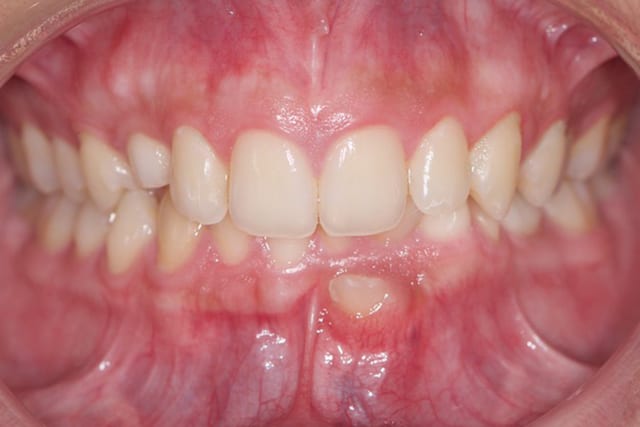
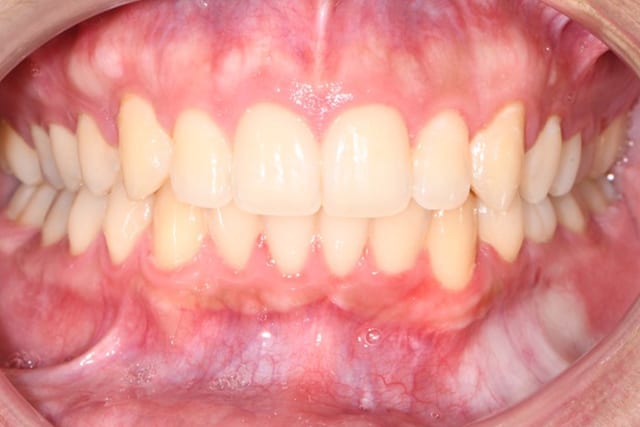
A real case from Sonrisas Dental Center showing how surgical exposure and TAD orthodontics rescue a tooth most patients are told must come out.
When a patient comes to us after being told their impacted tooth needs to be extracted, our first question is always the same: have you gotten a second opinion? In many cases — including the one we’re sharing today — the tooth can be saved. Completely.
What Is an Impacted Tooth?
An impacted tooth is one that cannot fully erupt through the gum line on its own. It may be blocked by adjacent teeth, bone, or soft tissue, leaving it partially or fully trapped beneath the gum. While wisdom teeth are the most widely known example, upper canines (eye teeth) are the second most commonly impacted teeth — and unlike wisdom teeth, canines play a critical role in your bite, your smile, and your long-term oral health.
Leaving an impacted tooth untreated can lead to:
- Damage to the roots of neighboring teeth
- Cyst formation around the impacted tooth
- Shifting or crowding of surrounding teeth
- Infection and bone loss over time
Key fact
Not every impacted tooth needs to be extracted. In many patients — especially when diagnosed early — a combination of surgical exposure and orthodontic treatment using a TAD can guide the tooth into its correct position in the arch.
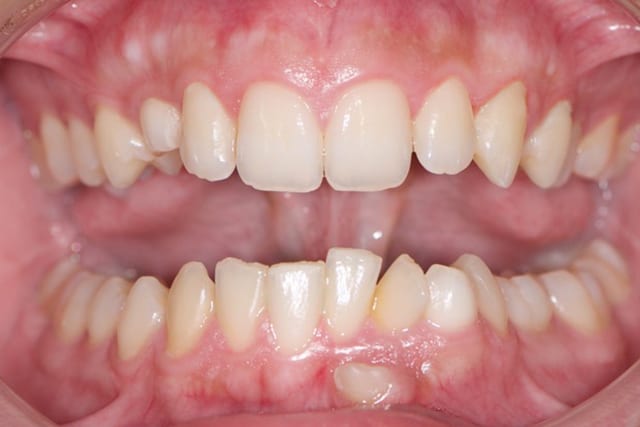
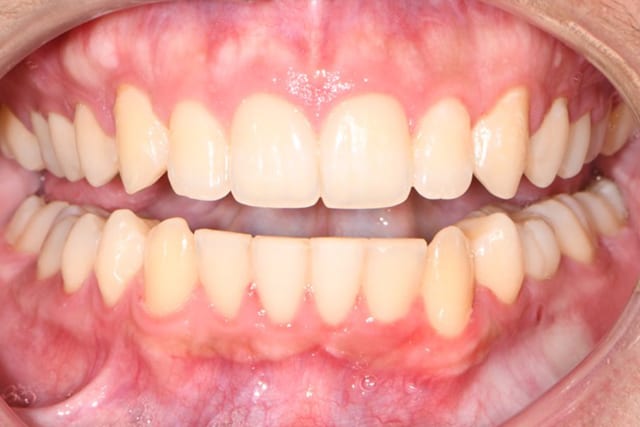
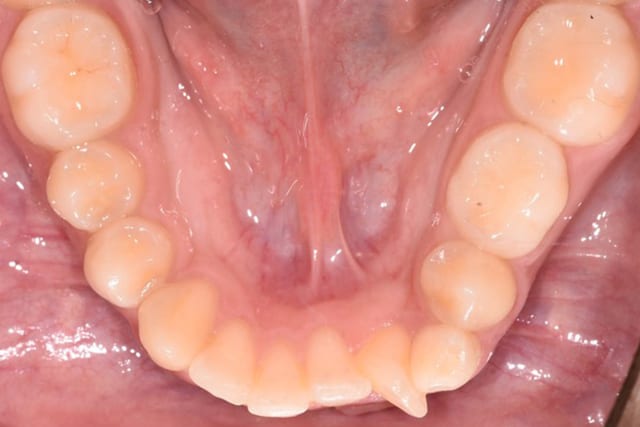
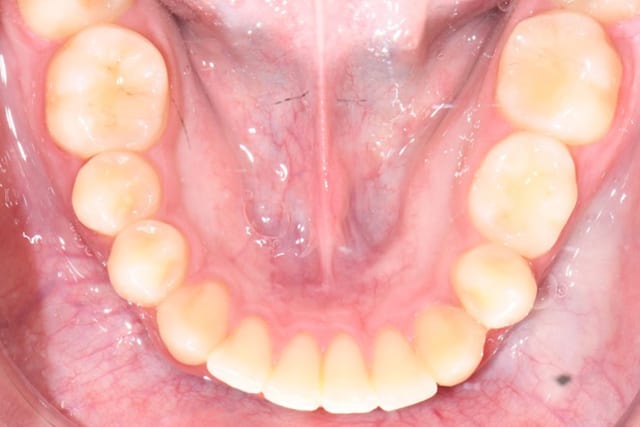
The Treatment: Step by Step
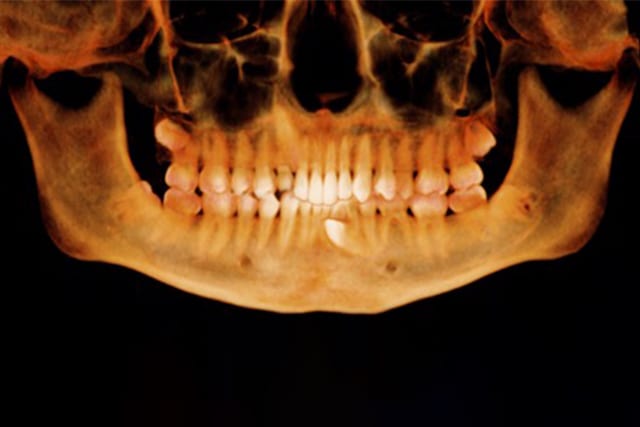
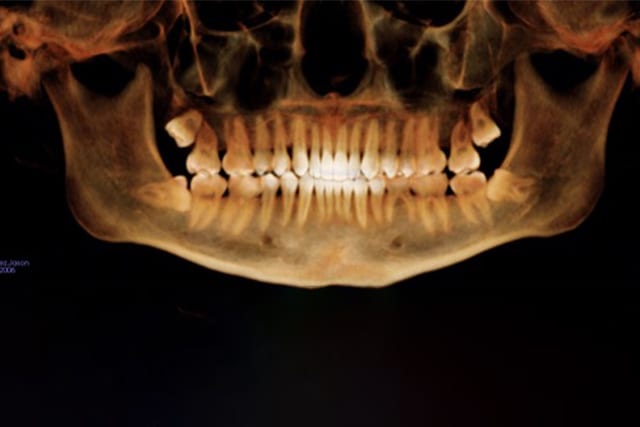
The case we’re highlighting involved a patient with a fully impacted tooth — completely buried under the gum with no visible crown. Here is exactly how our multi-specialty team at Sonrisas Dental Center approached it.
1. Diagnosis & Treatment Planning
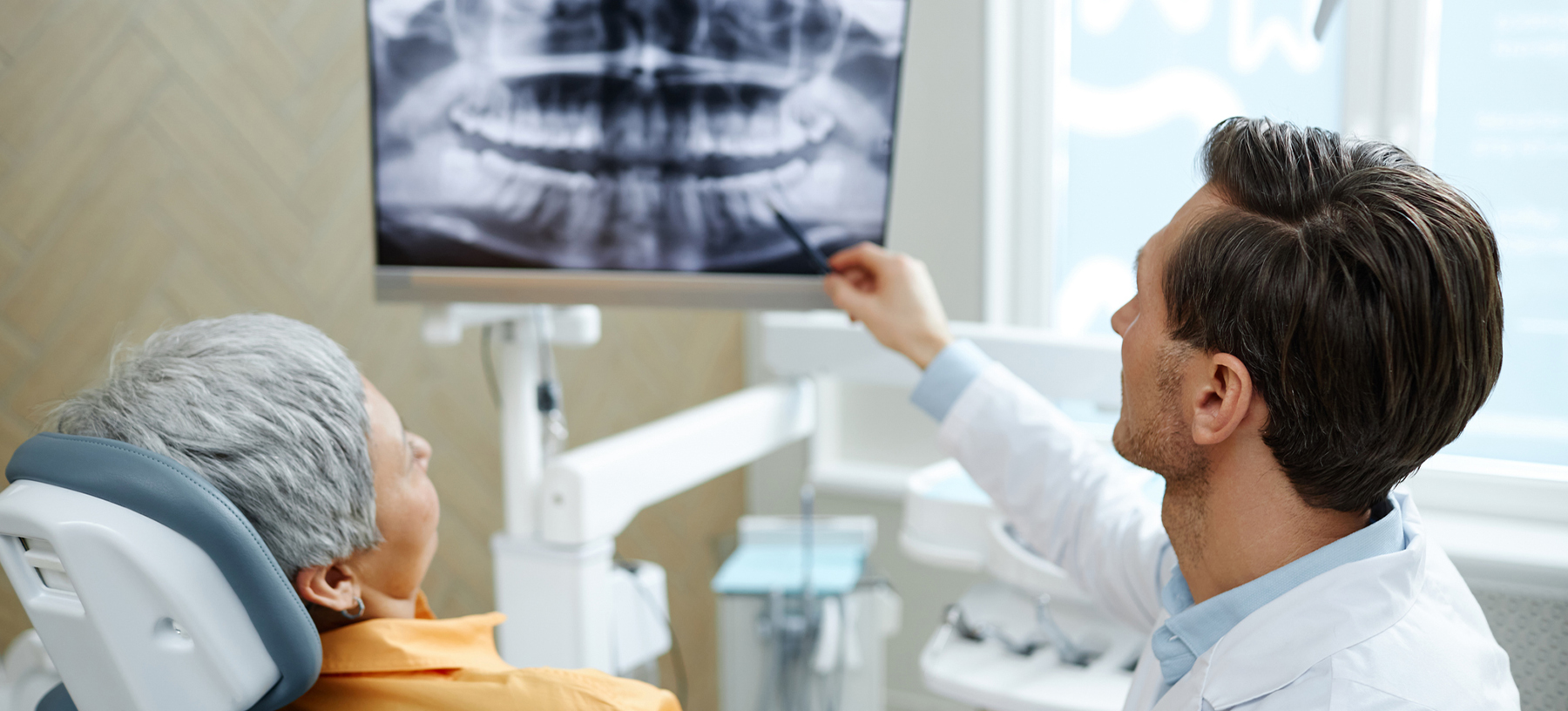
Cone Beam CT (CBCT) imaging confirmed the exact position of the impacted tooth, its angulation, and its proximity to adjacent roots. Our orthodontist and oral surgery specialist reviewed the case together and developed a coordinated treatment plan — all in-house.
2. Surgical Exposure of the Tooth
A minor surgical procedure was performed to uncover the impacted tooth. The overlying gum tissue was carefully reflected, the tooth was exposed, and a small orthodontic bracket was bonded directly to its surface. The gum was then sutured back into position.
3. TAD Placement (Temporary Anchorage Device)
A TAD — a tiny titanium mini-screw roughly the size of a small earring post — was placed in the jawbone near the impacted tooth. This provides a fixed, reliable anchor point that braces alone cannot replicate, allowing the orthodontist to apply precise directional force to the buried tooth.
4. Guided Eruption Into the Arch
Over the following months, gentle and controlled force from the TAD and orthodontic chain progressively guided the tooth upward, through the gum, and into its correct position in the dental arch — right alongside the patient’s other teeth.
5. TAD Removal & Final Alignment
Once the tooth reached its target position, the TAD was removed — a simple, quick procedure done chairside. Final orthodontic refinement aligned the tooth perfectly with the rest of the smile.


Why TADs Are a Game-Changer for Impacted Teeth
Traditional orthodontic mechanics rely on the force between teeth — meaning to move one tooth, you need another tooth to push or pull against. This creates limitations. A Temporary Anchorage Device (TAD) bypasses that limitation entirely by anchoring directly into bone, providing a stationary force point that allows precise, three-dimensional tooth movement that would be impossible with conventional braces alone.
TADs are:
- Minimally invasive — placement takes only minutes under local anesthesia
- Temporary — removed chairside once treatment is complete, with no lasting effect on the bone
- Highly effective — capable of moving teeth in directions that braces and aligners alone cannot achieve
- Tooth-saving — the primary reason patients avoid extraction in cases like this one
Why In-House Multi-Specialty Care Matters
Cases involving impacted teeth require collaboration between at least two specialties: orthodontics (to plan and execute the guided eruption) and oral surgery or periodontics (to perform the exposure procedure). At many practices, that means sending a patient to an outside oral surgeon — with separate appointments, separate records, and care that isn’t always tightly coordinated.
At Sonrisas Dental Center, our orthodontists, periodontists, and restorative specialists work together under one roof — and across all four of our Austin-area locations. That means:
- One unified treatment plan from day one
- Seamless communication between specialists
- Fewer appointments and less time off work or school
- Better outcomes because the whole team is aligned
Our Locations
Sonrisas Dental Center serves patients across Austin, Cedar Park, Round Rock, and South Austin — with the same multi-specialty team available at every location. No matter where you start, you have access to the full scope of care.
- 📍 Round Rock – North Austin area
- 📍 Cedar Park – Northwest Austin area
- 📍 South Austin – South Lamar corridor
Frequently Asked Questions
What is an impacted tooth?
An impacted tooth is one that is unable to fully erupt through the gum line on its own. It may be blocked by other teeth, bone, or soft tissue. While wisdom teeth are most commonly impacted, canines and other teeth can also become trapped beneath the gum.
Does an impacted tooth always need to be extracted?
Not always. In many cases — especially with canines — an impacted tooth can be saved through surgical exposure and TAD orthodontics. This avoids extraction and preserves your natural tooth for life, which is always the preferred outcome.
What is a TAD (Temporary Anchorage Device)?
A TAD is a small titanium mini-screw placed temporarily in the jawbone to serve as a fixed anchor point. Orthodontists use it to apply precise, controlled force to move teeth — including impacted teeth that cannot be moved with braces alone. TADs are removed once treatment is complete.
How long does impacted tooth treatment take?
Treatment timelines vary by case, but most patients complete the exposure-and-eruption phase within 12 to 24 months, alongside overall orthodontic treatment. Early diagnosis typically leads to better outcomes and shorter treatment times.
Does Sonrisas offer bilingual care for this treatment?
Yes. Sonrisas Dental Center is a fully bilingual dental group. All consultations, treatment planning, and follow-up care are available in both English and Spanish across all four locations: Austin, Cedar Park, Round Rock, and South Austin.